+8613706519013
 BHCポリマー添加剤有限公司/上海結晶井化学新材料有限公司


For rubber compounders working with EPDM, NBR, or CR, choosing the right form of hexamethylenetetramine (accelerator H) directly impacts product quality and production efficiency. While powder HEXA remains a traditional choice, HEXA(H)-80 predispersed masterbatch offers distinct advantages. Here is a head-to-head comparison across five critical areas.
Dispersion & Uniformity: Powder Clumps, Masterbatch Flows
Powder HEXA tends to form agglomerates, especially under humidity or insufficient mixing shear. These undispersed particles create localized high-concentration spots, leading to uneven crosslinking density and weak points in the final rubber article.
In contrast, HEXA(H)-80 masterbatch encapsulates 80% active accelerator in a polymer carrier (typically EPDM or EVM). This carrier ensures uniform particle distribution at the micro-scale, eliminating agglomerates. The result: consistent cure state throughout thick sections and complex geometries.
Key takeaway: Uniform dispersion reduces scrap rates and improves mechanical property consistency.
Scorch Safety & Processing Window: Less Surprise, More Control
Poor dispersion of powder HEXA often produces microscopic "hot spots" during mixing, triggering premature crosslinking (scorch). Once scorch begins, the entire batch is compromised.
HEXA(H)-80 delays the onset of vulcanization slightly but consistently. The polymer carrier acts as a temporary barrier, releasing the active amine gradually. This built-in safety buffer extends Mooney scorch time (t5) at equivalent active dosages.
For large or thick-section molds requiring longer flow paths, this extended processing window is invaluable. Compounders gain more control with fewer rejected batches.
Handling, Dust & Production Environment: Clean Floor, Clear Lungs
Powder HEXA generates airborne dust during weighing and mixing. This creates three problems: respiratory health risks for operators, housekeeping burden from settled dust, and weighing inaccuracies due to material loss.
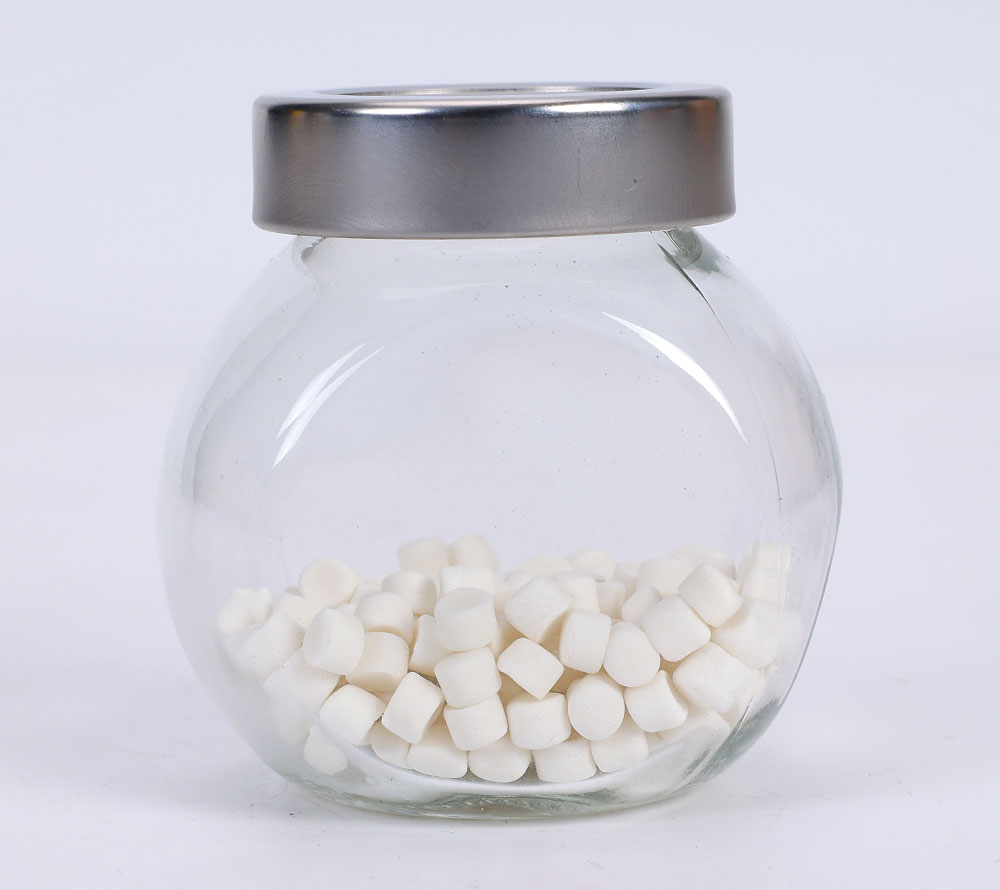
HEXA(H)-80 is a dust-free, free-flowing pellet. It enables:
• Automated gravimetric feeding systems
• Pneumatic conveying without filter clogging
• No cross-contamination with other ingredients
From a compliance perspective, switching to predispersed accelerator H helps meet OSHA silica dust standards and REACH workplace exposure limits.
Storage Stability & Seasonal Reliability: No More Winter Caking
Powder HEXA is hygroscopic. In humid or cold seasons, it absorbs moisture and forms hard cakes. These cakes bridge in hoppers and feeders, causing inconsistent feed rates or complete flow stoppage. Production downtime for manual unclogging becomes a seasonal headache.
HEXA(H)-80 masterbatch is moisture-resistant. The polymer encapsulation protects the active ingredient from humidity, ensuring free flow year-round. No caking. No bridging. No seasonal production delays.
Facilities reporting reduced hopper cleaning frequency from weekly to monthly after switching to HEXA(H)-80 are common.
Overall Cost & Performance Trade-Offs: Higher Price, Lower Total Cost?
On a per-kilogram basis, HEXA(H)-80 predispersed masterbatch costs more than powder HEXA due to the carrier and additional processing. However, total cost of ownership tells a different story:
| Cost Factor | Powder HEXA | HEXA(H)-80 |
| Scrap rate | Higher (dispersion failures) | Lower |
| Mixing cycle time | Longer (needs dispersion passes) | Shorter |
| Clean-up & filter maintenance | Frequent | Minimal |
| Worker health claims | Possible | Unlikely |
| Automation compatibility | Poor | Full |
When these factors are accounted for, HEXA(H)-80 often delivers lower net production costs, especially in high-volume or quality-sensitive applications.
Performance-wise, tensile strength, modulus, and heat aging resistance are equal or better with the masterbatch form due to more uniform crosslinking.